.jpg)
.jpg)
Budgets are, at their core, allocation systems. They are the structured frameworks designed to distribute finite resources across competing priorities. Whether formally documented or informally practiced, every household and institution operates within one.
However, a budget is more than a spreadsheet; it is a diagnostic tool. Budgets force decisions. Decisions reveal priorities. Priorities expose values. If you want to understand what matters most to an individual or a society, you don’t start with their stated beliefs; you start with their spending patterns. Show me your budget, and I will show you your values.
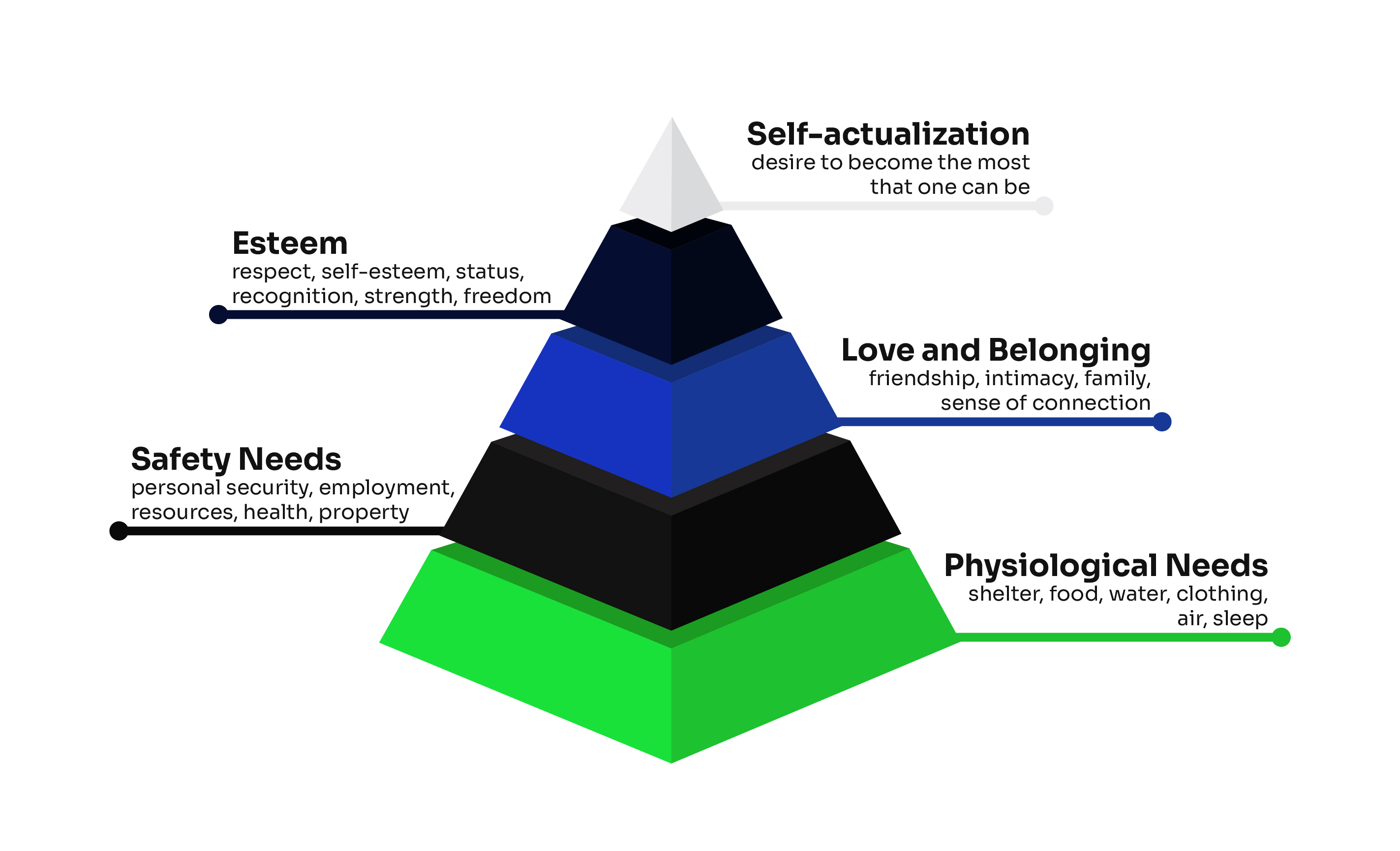
The Architecture of Modern Budgeting
Most budgeting frameworks are built upon a widely accepted psychological model: Maslow’s hierarchy of needs. At the base sit the physiological necessities, including shelter, food, water, clothing, air, and sleep.
From there, prioritization ascends toward safety, belonging, esteem, and eventually self-actualization. It is a system predicated on scarcity and survival, finite resources allocated to preserve and advance the self. At its core lies an unspoken assumption: “I must take care of myself.”
While prudence is wise and responsibility is virtuous, the cultural framework often drifts from stewardship into self-sufficiency. One might assume values are most visible in discretionary spending, but biblically speaking, the more revealing category is not our wants, it is our needs. Necessities answer a deeper question: Who or what do you trust to sustain your life?
The Great Inversion: Reassigning Our Source
The First Commandment states: “You shall have no other gods before Me”. While most interpret idolatry in ancient or symbolic terms, statues, altars, or carved images biblically, a "god" is anything that assumes roles reserved for God alone: Provider, Protector, Sustainer, Identity giver, and Peace bringer.
This raises a confronting diagnostic question: Do I feel safer with God or with money?
At this point, a reasonable objection arises: “But I need money for survival. I need shelter, food, water, clothing, air, and sleep. These aren’t luxuries, they’re necessities.” This is precisely where Scripture offers its most radical reframing. The Bible does not deny these needs. Instead, it reassigns their ultimate source.
Shelter — Who is Your Refuge? A budget allocates housing as the first line of security, but Scripture frames it relationally: "For You have been a shelter for me, a strong tower from the enemy" (Psalm 61:3). A home can protect from weather, but it cannot protect from existential fear.
Food — Who Sustains Your Hunger? We budget for nourishment, yet Christ declares, "I am the bread of life; whoever comes to Me shall not hunger" (John 6:35). Money can purchase meals, but it cannot satisfy the soul.
Water — Who Quenches Your Thirst? Jesus redirects the source of our most basic physiological need: "Whoever drinks of the water that I will give him will never be thirsty again" (John 4:14). There exists a thirst no material resource can quench.
Clothing — Who Covers You? Budgets fund apparel for image and protection, but God provides a covering that wealth cannot purchase: righteousness and a restored identity. Financial prosperity can enhance an image; it cannot erase shame.
Breath — Who Sustains Your Life? Air is the most constant necessity, yet Scripture reminds us that our very breath is in His hand (Job 12:10). Every inhale is borrowed; we live in a state of sustained dependence.
Sleep — Who Grants You Rest? Rest requires surrender. Peaceful sleep is less about exhaustion and more about trust: "In peace I will both lie down and sleep; for You alone, O Lord, make me dwell in safety" (Psalm 4:8).
What emerges from Scripture is not a denial of physical needs, but a reordering of their source. Maslow’s hierarchy begins with self-provision; the biblical framework begins with God's provision.
Modern budgeting says: Secure shelter, food, water, clothing, breath, rest, then pursue a higher purpose. Scripture says: Recognize God as your shelter, sustenance, covering, breath, and rest, then live securely within that provision. It is an inversion of dependence.
Conclusion: Reordering Trust
None of this is an argument against responsible budgeting. Scripture affirms stewardship, planning, and diligence. The issue is not whether we budget; it is what our budgets reveal we believe.
Financial tools are never neutral; they are worship documents. They reveal what we fear losing, what we strive to secure, and what we truly believe sustains us. If financial allocation is driven primarily by self-preservation anxiety, money has assumed a role it was never meant to hold, not servant, but savior.
Because when all is said and allocated: Show me your budget, and I will show you your values. Show me what you fund first, and I will show you what you trust most.
Learn more about David Laut and Kerux Financial here.
Fiduciary Duty & Professional Advice: Advisory services are offered through Kerux, LLC, a registered investment adviser. We are held to a fiduciary standard, legally obligating us to act in our clients’ best interests at all times, regardless of the spiritual or faith-based framing of our planning. This content is for educational and illustrative purposes only and does not constitute personalized investment, tax, or legal advice.
Risks & Suitability: All strategies involve material risks and depend on an individual’s unique circumstances. The returns and dollar amounts shown are hypothetical, illustrative examples only and are not based on actual client results. They assume a generalized investment strategy over a long-term time horizon and do not reflect fees, taxes, or individual investor circumstances. Hypothetical performance does not reflect actual trading and has inherent limitations; actual results will vary and may include loss of principal. Faith-based financial planning has inherent limitations and may not account for every market variable; therefore, past outcomes are not indicative of future results. Because every financial situation is unique, you should consult with your own financial advisor, tax professional, and or legal counsel before implementing any strategy discussed herein.